
Finding your voice through writing

News, events, resources and opportunities
Spark Mentoring: whether you want to work with one of our experienced mentors on a monthly or one-off basis, we provide an affordable and flexible set of options to help you get the help you need to elevate your manuscript.
The Times/Chicken House Children’s Fiction Competition (full-length novel for readers aged 7-18) and The Broken Binding Prize (YA sci-fi, fantasy, and speculative fiction) - Both prizes open for entries on 9th January and the deadline for submissions is 1st June 2026.
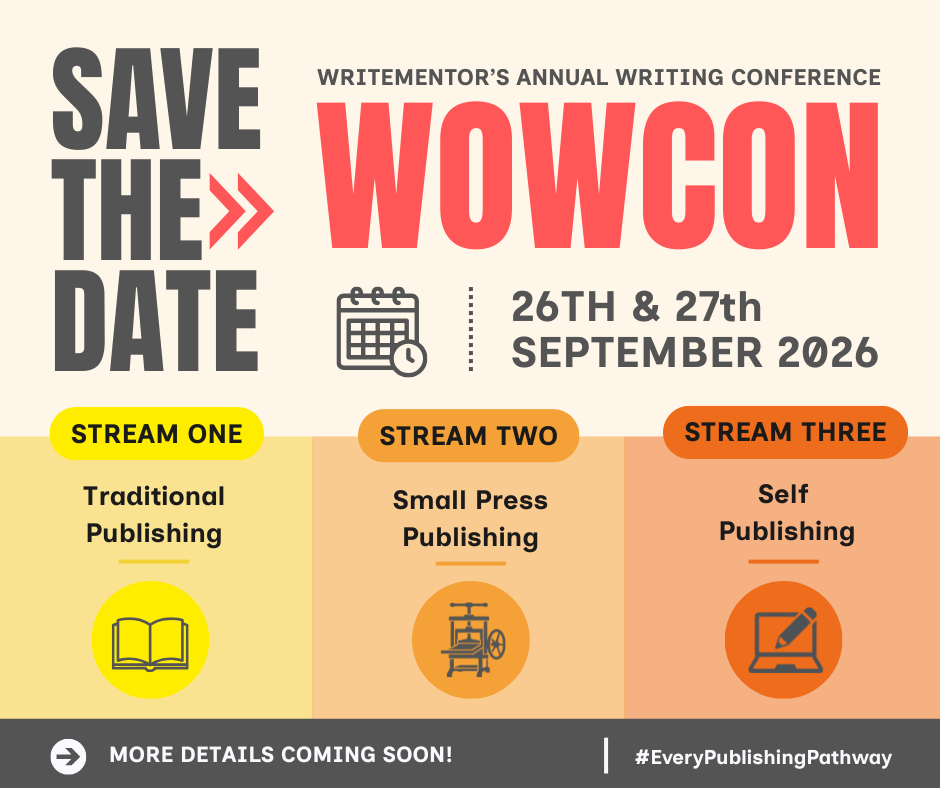
Sign up for Early Bird Tickets/more information here.
2026 Awards Update
As emailed yesterday we’re VERY close to getting a longlist but essentially we have too many entries that our readers like, and we’re trying to narrow that list down a little to have a sensible longlist.
We will let you know later this week - I am hopeful for Friday - of the outcome.
Feedback will follow but again we ask for patience as more than 800 of you asked for feedback, so this will take some time to get it all out.
So you can relax this week and look out for an email on Friday and a social media post to follow (as well as the result in next week’s newsletter!).
Featured Spark Mentor

‘Speculative Fiction is my wheel house across all novel age groups including MG, YA, NA, and Adult. I’ve had four books published since 2023, with two more coming from Hachette. My books have been translated into several languages and are distributed in a range of territories.
I’ve been a mentor with WriteMentor for several years now, and I absolutely love interacting with my mentee and helping to make their manuscript the best it can be before submitting to agents. As a speculative writer, I work best with Sci-Fi, Fantasy, Magical Realism, Urban Fantasy, Dystopian, Horror, Time Slip, and Cli-Fi manuscripts.
When I mentor I like to set flexible goals that can be adjusted to suit the mentee’s pace and lifestyle, while also pushing to get the work done. I’m happy to answer questions about my experience gaining agent representation, being on submission, and I’ll try to demystify the publication process. I focus on the high-concept and commercial aspect of my clients’ manuscripts, and try to find the best ways to make them sing in front of an agent or editor.
I’ve been professionally editing manuscripts freelance since 2019, and have so far been lucky enough to give feedback on over one hundred clients’ manuscripts. Several of my clients have gone on to agent representation, become traditionally published, and win awards. I like to work with the author to make sure their artistic vision matches up with what I see as the crucial commercial elements, and I hope my editing style reflects that.’
Hub Calendar (all times GMT/BST)
May
Agent Q&A Monday 18th 7pm with Sandra Sawicka
PB Chat Thursday 21st 7pm with Clare Helen Welsh
Pitchhero Friday 22nd (pitch on the Thursday) with Sandra Sawicka
DACIW chat Friday 29th May 2-3pm with Katina Wright
All sessions are recorded and available to watch back, so don’t fret about being there ‘live’. This is just a few of the many sessions/opportunities that happen every month in the Hub and are all available on catch-up if you join now.
What is the Hub?
The WriteMentor Hub is a group chat you actually want to be in. Writing club meets social hangout, here we cheer each other on, share knowledge and advice, level up our skills, and have fun doing it.
Everyone’s invited and our doors are open all year round. From absolute beginners to multi-published authors, we all have something to share and something to learn. No gatekeeping, no cliques, no secret handshakes. Just a welcoming crew of writers who understand that success is not about perfection, pressure, or pretension. It’s about connection, collaboration, and community.
More than just a space to chat, the Hub is a creative playground of inspiration: live talks and workshops, structured courses, and an ever-growing library of resources to help you hone your craft. Join critique groups for honest, constructive feedback, take part in interactive writing sprints to boost motivation, or pitch your work to agents in our monthly contests.
Whether you’re looking for advice, accountability, or a creative spark, join the Hub today.
The Final Word
Finding your voice through writing
Perhaps the most rewarding aspect for any writer is the journey of finding your voice through writing.
We, of course, have a writing voice - the most unique of things, much like our DNA, no two individuals are the same.
Some voices are more unique and identifiable, for sure, while others are more timid or they merge into the background. This is life, too.
But writing (and reading lots to hear other voices) is the surest way to sharpen that voice - it helps you to bring clarity to what you want to say. It helps you to mould your words with your own values and word views. It helps you to write down YOU on the page even when YOU are not there.
Whether consciously or not, we are always there in the story, alongside our 8 legged-alien protagonists, or our teenage heroes, who are of course nothing like us, but they will all carry the part of your which is impossible to delete, and always detectable - much less your fingerprints or skin cells at a crime scene.
Our writing voice permeates into every word we type, into every scene we imagine and into each characters traits and decisions.
And what I find is even more remarkable than this - as we write more, so our ‘real-life’ voice changes, too. We gain confidence in what we want to say, in how we want to express ourselves in the world, and how we respond to those around us.
We often think about writing as an act of service to others, where we create stories for them, and sure that’s true, but we also write to help us to work out who and what we are in this busy, confusing and polarising world.
We write to explore many different points of view, many different worlds and possible outcomes and futures (and pasts and presents!) - we inhabit and become many different people and when we do so, we get to inhabit not just one life, but many.
Simply put, writing helps us find out more about who we are by exploring not just ourselves, but putting on the shoes of others, developing more empathy and a more enlightened world view, and becoming the very rounded, kind and insightful writers that I know you all are.
Being a writer is also about being brave, and about expressing yourself honestly, even when what you say is not always popular - we need a multitude of voices, not just a world of lemmings all singing in the same way, because each of us has a unique set of memories, experiences and ideas to tell the world about.
This is why every voice matters.
And this is why writing matters.
Because very word written brings you a sentence closer to revealing your true voice.
Writing can be lonely, but it doesn’t need to be
May the Force be with you!
Stuart, Florianne and Melissa
From a young age I've explored the world through writing and reading. The elusive 'voice' agents and publishers are looking for can seem confusing. But this makes it so much simpler - write your way into your voice! Seems obvious when you say it but I think aspiring authors can often feel the pressure to find the 'right' voice, when in fact it may be a case of developing your own voice through writing. 😊✍️